When school cafeterias go quiet in June, millions of children lose access to the free breakfasts and lunches they counted on between September and May. The USDA estimates that kids in low-income households consume up to 40% fewer meals during summer months than they do when school is in session. Summer EBT — sometimes called "Sun Bucks" by the state agencies that administer it — is the federal government's permanent answer to that gap. It puts $120 per eligible child onto an EBT card every summer, and unlike the pandemic-era P-EBT program that inspired it, Summer EBT is now written into law and is here to stay through at least 2029.
I have spent the better part of the last two years tracking this program as it rolled out state by state, and the single most common question I get from parents is some version of: "Wait, this is real? I didn't even know my kids qualified." The missed take-up is enormous. USDA's own first-year data showed that roughly 1 in 4 eligible children in opt-in states did not receive benefits, almost always because their family had never heard of the program or assumed it had ended with the pandemic. This guide is my attempt to close that gap.
Summer EBT is a federally funded nutrition benefit administered jointly by the USDA's Food and Nutrition Service and individual state agencies. The program was permanently authorized under the Fiscal Responsibility Act of 2023 and launched in the summer of 2024. It is not the same thing as the pandemic-era P-EBT, although some families will recognize the EBT card format. The biggest difference is durability: P-EBT expired with the public health emergency, while Summer EBT is now a recurring annual program.
The structure is straightforward. For each eligible school-aged child in a household, the state issues $120 in EBT benefits for the summer period — typically covering June through August, though exact dates vary by state. Children under age 6 in households receiving SNAP, TANF, or income-based Medicaid also qualify even if they aren't yet in school. The funds come pre-loaded on an EBT card (either the family's existing SNAP card or a dedicated Summer EBT card mailed to the household), and they can be used at any SNAP-authorized retailer to buy the same groceries SNAP covers.
The benefit is a lump sum, not a monthly payment. A family with three eligible children will see $360 hit their card all at once in late spring or early summer. Those funds do not expire until 122 days after issuance, which gives families roughly four months to spend them down — well past the start of the next school year in most districts.
Eligibility for Summer EBT flows through four main doors. The first two are automatic — meaning the state already knows about your child and you do not need to fill out a separate application. The third and fourth require a household to take action, but the income threshold is the same as for free or reduced-price school meals.
| Pathway to Eligibility | What Triggers It | Do You Need to Apply? |
|---|---|---|
| Direct certification via SNAP | Household receives SNAP at any point during the school year | No — automatic |
| Direct certification via TANF or income-based Medicaid | Household receives TANF or Medicaid (with income below 185% FPL) at any point during the school year | No — automatic |
| Free or reduced-price school meals approval | Household is approved for NSLP free or reduced-price meals through the school district | Yes — submit a school meal application to the district |
| Income-based application | Household income is at or below 185% of the federal poverty line, but no one is enrolled in the programs above | Yes — submit a Summer EBT application through your state's administering agency |
Source: USDA Food and Nutrition Service, Summer EBT Program Regulations, 7 CFR Part 292, finalized March 2024.
For the 2026 program year, 185% of the federal poverty line works out to roughly $2,510 a month for a household of one, $3,407 a month for a household of two, $4,303 for three, and $5,200 for four. These figures adjust each April when HHS publishes the updated poverty guidelines. If your income is anywhere near those numbers and you have school-aged children, it is almost always worth filling out an application — the worst a state can do is say no.
Unlike regular SNAP, which is a federal-state partnership every state participates in, Summer EBT is opt-in. States have to actively notify USDA by January 1 of each year that they intend to operate the program the following summer. In the program's first year (2024), 35 states, the District of Columbia, five U.S. territories, and two tribal nations opted in. By summer 2025 the list had grown to include 41 states plus additional tribal nations. For 2026 the participating list is expected to grow again, though a handful of states have publicly stated they will continue to opt out.
If you are unsure whether your state participates, the most reliable source is the USDA FNS Summer EBT page, which is updated each January when state plan submissions close. Your state's department of education or department of human services can also confirm participation. The good news for 2026 is that the program is now mature enough that most states have built the administrative infrastructure, and the marginal cost of staying in is lower than the political cost of dropping out.
The mechanics of benefit issuance are the part most families find confusing, so let me walk through the two scenarios. If your household already receives SNAP, the $120 per child is added to your existing EBT card. You will not get a separate card, and you will not receive a separate PIN. The funds simply show up in your balance alongside your regular SNAP allotment — but they are tracked separately on the back end so they do not affect your SNAP issuance schedule.
If your household does not receive SNAP, the state will mail you a dedicated Summer EBT card. The card arrives in an unmarked envelope (which causes some people to throw it out as junk mail — open anything from your state's department of human services between May and July). The card comes with instructions for activating it by phone and selecting a four-digit PIN, just like a debit card. Once activated, you can use it at any retailer that accepts SNAP, including major grocery chains, most discount stores like Walmart and Dollar General, many corner stores, and an increasing number of online retailers like Amazon and Walmart Grocery Pickup.
Timing varies by state. Most states issue benefits in a single batch in late June or early July. A handful of states stagger issuance by school district or by last name. If you have not received your card or seen funds added to your SNAP balance by mid-July and you believe your child qualifies, call your state's Summer EBT hotline. Every participating state operates one.
Summer EBT funds are subject to the same purchase rules as regular SNAP. This is the part where I see families get tripped up most often, so it is worth spelling out clearly.
What you can buy:
What you cannot buy:
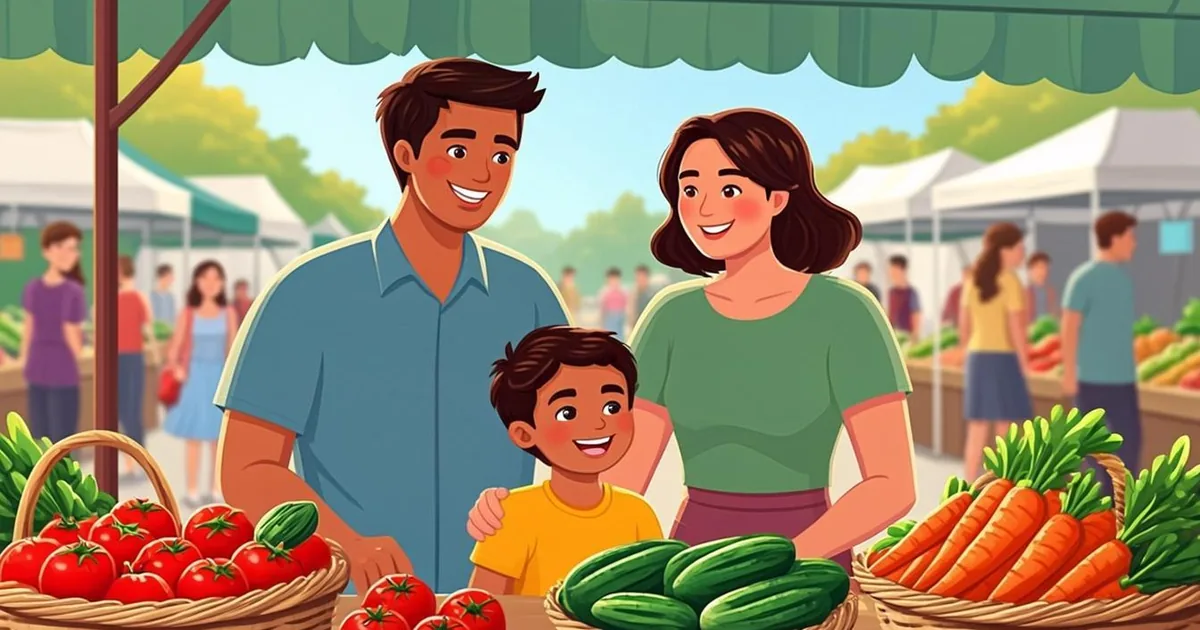
One thing worth knowing: an increasing number of farmers markets now accept EBT, and many participate in "double bucks" programs that match every SNAP or Summer EBT dollar spent on fresh produce. If your local market participates, $20 in Summer EBT can buy $40 worth of fruits and vegetables. The Double Up Food Bucks program operates in more than 25 states; ask the market manager how to access the match.
The most common coordination question I hear is whether Summer EBT counts against you for other programs. The short answer is no. Summer EBT is treated as a child nutrition benefit, not as income, for the purposes of SNAP, TANF, Medicaid, SSI, housing assistance, WIC, or any other federal means-tested program. Receiving Summer EBT will not reduce your SNAP allotment, lower your housing voucher, or affect your Medicaid eligibility.
The reverse is also true: receiving Summer EBT does not automatically enroll you in SNAP, even though the cards look identical. If you think your household might qualify for SNAP during the school year as well, Summer EBT is a useful entry point — many state agencies use Summer EBT contact information to outreach families about year-round SNAP eligibility, and you can ask the caseworker who answers the Summer EBT hotline to help you start a SNAP application.
For families with WIC, the two benefits stack without conflict. WIC covers specific foods for pregnant women, new mothers, infants, and children under 5. Summer EBT covers any SNAP-eligible food for school-aged children. There is no penalty for using both, and the programs serve complementary age ranges — most WIC families with school-aged siblings will use WIC for the youngest and Summer EBT for the older kids.
USDA's own analysis of the 2024 program year estimated that approximately 21 million children received Summer EBT, but another 5 to 7 million eligible children did not — primarily because their families did not know the program existed or did not realize their child had been automatically enrolled. The economic cost of that gap is significant. At $120 per child, every 1 million missed enrollments represents $120 million in benefits that went unclaimed and unspent in communities that need the economic activity.
From a household perspective, $120 per child is not life-changing on its own, but it is meaningful. For a family of three school-aged kids, $360 buys roughly two weeks of groceries at the low end of the spending spectrum. The USDA's own research suggests every $1 in SNAP-like benefits generates $1.50 to $1.80 in local economic activity — money spent at grocery stores that pay employees, who in turn spend their paychecks locally. The program is one of the most efficient anti-hunger interventions the federal government operates.

Founder & Lead Researcher · Food Stamp Eligibility Calculator
Wasim Akram is an independent web publisher and digital entrepreneur with over 8 years of experience in SEO, web publishing, technical research, and building digital products. Since 2018, he has been creating niche websites, online tools, custom CMS platforms, and WordPress products. He founded Food Stamp Eligibility Calculator in 2026 after seeing firsthand how difficult it was for ordinary families to get a straight answer about whether they qualified for food assistance. Every article on this site is researched, written, and reviewed against primary government sources including USDA Food and Nutrition Service manuals, state SNAP policy manuals, the Federal Register, and official state agency guidance.
Want to know if your income qualifies? Use our free calculator to check your SNAP eligibility in about 90 seconds — no paperwork, no commitment, just an honest answer.
Check My EligibilityThe federal benefit is
As of the 2026 plan submissions, more than 40 states, the District of Columbia, five U.S. territories, and multiple tribal nations are participating. A small number of states have opted out. The USDA FNS Summer EBT page maintains the current list of participating states and tribal nations, which is updated each January.
No. If your child is approved for free or reduced-price school meals through the National School Lunch Program, or if your household receives SNAP, TANF, or income-based Medicaid, your child is automatically enrolled and the benefits come on your EBT card without a separate application.
Yes. Summer EBT is independent of SNAP. Your child qualifies if your household income is at or below 185% of the federal poverty line, even if you don't receive any other benefits. You may need to fill out a school meal application or a Summer EBT application through your state's agency.
Summer EBT funds work like SNAP. You can buy fruits, vegetables, meat, dairy, bread, cereals, snacks, and non-alcoholic beverages at any SNAP-authorized retailer. You cannot buy hot prepared foods, alcohol, tobacco, vitamins, household supplies, or pet food.
No. Summer EBT is a nutrition benefit for children and is not considered in the public charge determination. Receiving Summer EBT will not affect immigration applications for the child or any household member. The program is also available to eligible children regardless of the immigration status of their parents.
Gross income is your total household income before any deductions. Net income is what's left after subtracting all allowable SNAP deductions — the standard deduction, the 20% earned income deduction, medical expenses for elderly or disabled members, dependent care costs, court-ordered child support, and excess shelter costs. Most households have to clear both tests (130% FPL gross and 100% FPL net). Households with an elderly or disabled member only need to clear the net income test.
Yes, if you live in one of the 40+ states that use Broad-Based Categorical Eligibility (BBCE). BBCE lifts the gross income limit to 200% FPL or higher in participating states and removes the asset test entirely. In 2026, a household in a BBCE state with a 200% FPL cap can earn up to about $2,508 a month for one person, $3,395 for two, or $5,198 for a family of four and still potentially qualify. Check your state's specific BBCE rules to see if you're eligible even with higher income.
Yes. Self-employment income is calculated as gross business receipts minus allowable business expenses — things like supplies, business rent, business utilities, advertising, and insurance. You can't deduct personal expenses, federal income taxes, depreciation, or entertainment costs. Once you arrive at net self-employment profit, that figure counts as earned income, which means it also gets the 20% earned income deduction when calculating net income for SNAP.
Seniors (60 or older) and people receiving disability benefits get four breaks: they skip the gross income test entirely, they get an uncapped excess shelter deduction (no $712 cap), they can claim the medical expense deduction for costs over $35 a month, and they get a higher asset limit in non-BBCE states ($4,500 instead of $3,000). These exceptions often make the difference between qualifying and not qualifying for elderly applicants with modest retirement income.
SNAP income limits are updated every fiscal year (October 1) based on the Federal Poverty Level, which the Department of Health and Human Services recalculates annually using inflation data. The 2026 figures represent a modest increase over 2025. Standard deductions, shelter caps, and utility allowances also adjust annually. Your benefit amount can change at recertification even when your income hasn't, simply because the federal numbers shifted.
Founder & Lead Researcher · Food Stamp Eligibility Calculator
Wasim Akram is an independent web publisher and digital entrepreneur with over 8 years of experience in SEO, web publishing, technical research, and building digital products. Since 2018, he has been creating niche websites, online tools, custom CMS platforms, and WordPress products. He founded Food Stamp Eligibility Calculator in 2026 after seeing firsthand how difficult it was for ordinary families to get a straight answer about whether they qualified for food assistance. Every article on this site is researched, written, and reviewed against primary government sources including USDA Food and Nutrition Service manuals, state SNAP policy manuals, the Federal Register, and official state agency guidance.